A CLAUDE.md file appears to have been accidentally included inside a Netflix iOS app bundle, adding Netflix to the growing list of big software companies whose AI-coding instructions have turned up in shipped products.
Update — July 15, 2026: A July 12 thread in r/AgentsOfAI resurfaced the screenshot. A prominent reply links to a real, public
CLAUDE.mdin Netflix'smetaflow-nflx-extensionsrepository, but that is a separate file in a Python Metaflow extensions monorepo—not the reportedArgo.appartifact. It does not provide or verify the full iOS-bundle file. As of this update, we still have only the screenshot-backed evidence described below.
The artifact has been circulating on X, Reddit, and LinkedIn. The clearest screenshot we found labels the path as Netflix/Payload/Argo.app/CLAUDE.md and shows what looks like a markdown diff for an iOS feature called an "Emphasized Entrypoint" section.
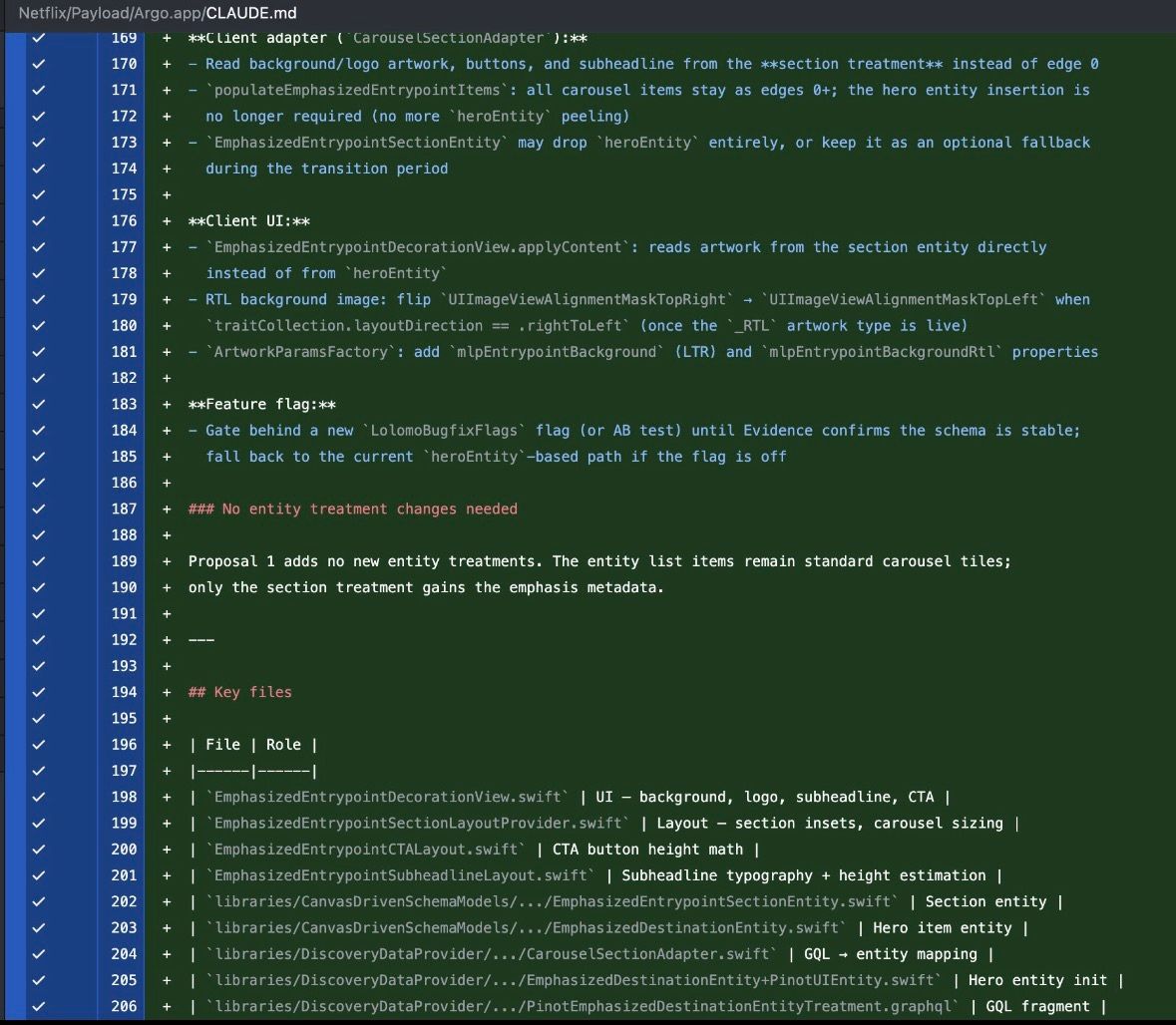
We could not find a full public copy of the Netflix file, so treat this as a screenshot-backed report rather than a full-file verification. That matters: the visible image is enough to show that a CLAUDE.md-style artifact was apparently bundled, but not enough to confirm the whole file, its length, or whether it contained anything sensitive.
The short answers
- Reported path:
Netflix/Payload/Argo.app/CLAUDE.md. That path comes from the circulating screenshot; we have not independently extracted the app bundle. - Data visible: implementation notes, feature and experiment language, and Swift and GraphQL file names. The screenshot does not show credentials, tokens, or customer data, but it cannot rule out material elsewhere in the file.
- Full file available: not that we could verify. The public Netflix Metaflow repository file now shared in Reddit replies is a different
CLAUDE.md, not a copy of the reported iOS artifact. - How to keep it out of a release: exclude agent-context files from packaging rules and resource-copy build phases, then scan the final archive. A
.gitignorerule alone does not remove a file that the build is configured to package.
What was visible
The screenshot does not show passwords, tokens, or customer data. It shows implementation notes for a Netflix iOS UI change: client adapter behavior, client UI changes, a feature flag or A/B test gate, and a table of relevant Swift and GraphQL files.
That is still useful information for outsiders. File names, feature names, A/B test language, and internal architecture hints can help competitors, scrapers, or attackers map a codebase. But this is not the same category as a credential leak. Based on the visible material, it looks more like accidental release of developer guidance than a breach of user data.
Why a CLAUDE.md file is there at all
CLAUDE.md is a project instruction file used by Claude Code. Anthropic's own docs say Claude Code loads CLAUDE.md files for a session, and that those files are "loaded in full regardless of length," even though shorter files tend to work better. The point is to give an agent local context: commands, codebase conventions, project rules, file maps, and workflow expectations.
Claude Code is separate from Claude Projects, Anthropic's long-context workspace product. The naming overlap does not make the public Metaflow file, the reported iOS artifact, and a Claude Projects workspace interchangeable.
Anthropic also promotes this pattern in its Claude Code materials. In a company-use case document, Anthropic says teams should write detailed Claude.md files because documenting workflows, tools, and expectations improves Claude Code's performance. The same document also recommends tighter access controls, such as using MCP servers rather than broad command-line access for sensitive data.
In other words, the surprise is not that Netflix engineers might use Claude Code. Anthropic has a recorded webinar with Netflix engineering leaders about scaling AI agent development across more than 3,000 developers. The surprise is that a working instruction artifact appears to have made it into a public app bundle.
The bigger pattern
This is becoming a new kind of software supply-chain lint problem. Teams already know not to ship .env, .npmrc, source maps, private keys, or internal config. Now the checklist needs to include AI-agent context files: CLAUDE.md, AGENTS.md, PROMPT.md, rules folders, local memory files, and tool-specific planning docs.
The failure mode is also distinct from an agent acting with excessive permissions. Nowrap's report on a Cursor agent deleting a production database covers that separate runtime-control risk, while our Claude Fable 5 system-prompt investigation shows why the provenance of a purported instruction leak matters.
The Netflix screenshot is also a useful reminder that AI adoption inside large companies is no longer theoretical. If an app bundle contains a nested CLAUDE.md under Argo.app, it suggests agent instructions were close enough to active product work to live beside the code or build artifacts for a specific area of the app.
That does not mean Netflix is "vibe coding" its iOS app. A shared agent instruction file can be the opposite: a way to standardize how AI tools interact with a mature codebase. The problem is packaging hygiene, not the existence of the file.
What teams should do now
Add AI-agent files to release exclusion rules. Scan app bundles, web builds, containers, and mobile archives for CLAUDE.md, AGENTS.md, .claude/, .cursor/, local memory files, scratch plans, and prompt libraries before shipping. The control should be tool-agnostic: whether a team uses Claude Code or an AI-first editor such as Cursor, local agent context should not reach a release by default.
Also separate agent guidance into two classes. General coding conventions may be fine to keep in a repository, especially if the repo is public. But feature plans, experiment names, roadmap hints, service topology, internal file maps, and incident notes should be treated as internal documentation and blocked from release artifacts.
The lesson is simple: AI coding agents are now part of the build environment. Their context files need the same review, redaction, and packaging controls as any other developer artifact.